
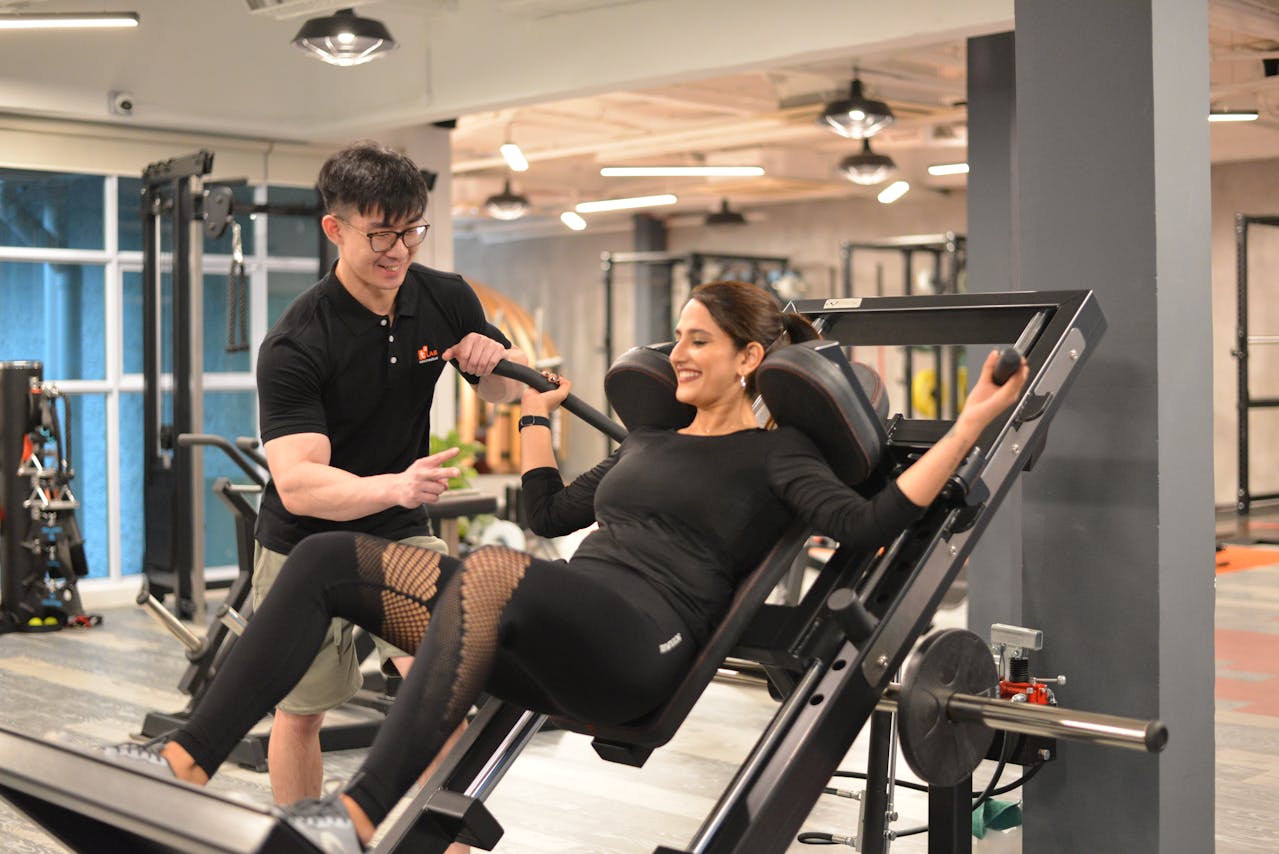
The premium end of Singapore’s corporate benefits landscape has undergone a quiet but significant evolution. Personal gym trainer sessions, once considered a personal lifestyle expenditure entirely separate from professional compensation, are increasingly appearing in the benefits packages of senior executives, high-potential talent cohorts, and key retention targets at Singapore’s most sophisticated employers. Understanding how companies are structuring these arrangements, what motivates the investment, and what commercial logic underpins it helps HR professionals and business leaders evaluate whether Personal gym trainer singapore investment belongs in their own talent strategy. The answer, supported by both performance research and retention data, is increasingly yes.
The Strategic Logic Behind Personal Training as a Corporate Benefit
Corporate investment in personal training sessions reflects a shift in how Singapore’s most sophisticated employers think about the relationship between employee physical health and professional performance. The evidence connecting regular structured exercise to cognitive performance, stress resilience, sleep quality, and leadership effectiveness has become sufficiently robust that forward-thinking companies are treating personal training investment as professional capacity development rather than personal health subsidy.
This framing matters commercially. Professional capacity development investments are evaluated on their return relative to the professional performance improvements they generate. By this standard, a company that funds personal training sessions for an executive whose improved sleep quality, stress resilience, and sustained cognitive performance produces better business decisions, stronger client relationships, and reduced absenteeism is generating a return on that investment that can be meaningfully larger than the cost of the sessions.
Structuring Personal Training Benefits: Common Approaches in Singapore
Singapore companies are using several structural approaches to fund personal gym trainer sessions as part of their executive benefits architecture.
Flexible Benefits Allowances
The most prevalent approach is including personal training within a flexible benefits allowance that gives employees discretion over how a defined annual health and wellness budget is allocated. An executive who chooses to direct their flexible allowance toward personal training sessions receives the full commercial value of that choice without the company needing to negotiate specific personal training arrangements on behalf of individual employees.
This structure is administratively efficient, respects individual preference diversity, and avoids the equity concerns that arise when specific wellness benefits are available only to employees who happen to prefer the activity in question. The flexible allowance model has become the dominant framework for premium wellness benefits delivery among Singapore’s top-tier employers.
Vendor Relationships With Premium Gym Operators
Some Singapore companies establish direct vendor relationships with premium gym operators, negotiating corporate rates for personal training sessions that are then made available to nominated employees as a defined benefit. This approach allows the company to exercise quality control over the training environment and provider, which is relevant when the benefit is positioned as a professional performance investment rather than a general wellness perk.
The corporate rates available through direct negotiation with Singapore’s premium gym operators typically represent meaningful cost reductions from rack rate personal training pricing, improving the cost-efficiency of the benefit relative to reimbursing individual employees at full retail pricing.
IRAS Tax Considerations for Personal Training Benefits
Singapore’s IRAS treatment of personal training benefits as part of an employment benefits package has direct implications for how these arrangements should be structured. Personal training sessions funded by employers are generally treated as taxable benefits in kind for the employee, assessed at the cost to the employer.
Companies that wish to minimise the tax impact on employees typically either gross up the benefit to cover the employee’s additional tax liability, structure the benefit within a flexible allowance framework that already accounts for the taxable benefit position, or engage tax advisors to explore whether specific structuring approaches can achieve more favourable tax outcomes within the framework of applicable IRAS guidance.
True Fitness Singapore has established corporate relationship structures that accommodate the variety of approaches Singapore companies use to fund personal training as an executive benefit. True Fitness Singapore works with corporate clients to create arrangements that deliver genuine professional performance value while fitting within the administrative and tax frameworks that Singapore’s corporate environment requires.
FAQs
Q. – How do we determine which employees should be offered personal training as a benefit without creating perceptions of inequity?
Ans. – The most effective approaches use objective criteria for benefit eligibility rather than subjective selection. Tier-based approaches that make personal training available to all employees above a defined seniority level are perceived as more equitable than selection-based approaches. Alternatively, making personal training available to all employees within a flexible benefits allowance framework that offers equivalent value regardless of which wellness choices are made eliminates the inequity concern entirely by allowing personal choice within equal overall benefit value.
Q. – What ROI metrics should we track to evaluate whether our investment in personal training as an executive benefit is producing commercial returns?
Ans. – The most practical ROI metrics for corporate personal training programmes include absenteeism rate changes in the beneficiary group compared to a baseline or control group, health insurance claim frequency and cost changes, employee engagement and retention survey results among beneficiaries, self-reported productivity and energy metrics from periodic beneficiary surveys, and manager-assessed performance ratings across the benefit period. No single metric captures the full return, and a composite dashboard approach produces a more complete picture than relying on any individual data point.
Q. – Is personal training as a benefit more effective for retention when provided in premium gym environments versus lower-cost alternatives?
Ans. – Yes, meaningfully. The benefit signal value of premium personal training access, which communicates that the company values the employee’s wellbeing at a high standard, diminishes when the training environment quality does not match the premium positioning. An executive who receives a personal training benefit redeemable only at budget facilities experiences the benefit as less prestigious than the company intends, reducing its retention signal value. The quality of the training environment is part of the benefit communication, not just a delivery detail.
Q. – Can we provide personal training as a benefit to overseas employees based in Singapore on expatriate packages?
Ans. – Yes, and Singapore’s status as a regional hub for multinational operations means that premium gym operator corporate arrangements typically accommodate international employees on Singapore-based assignments within their corporate membership frameworks. The tax treatment of personal training benefits for internationally mobile employees depends on their specific employment contract structure, residency status, and the double taxation arrangements between Singapore and their home country, making specialist international mobility tax advice advisable for this population.
Q. – How do we handle situations where an employee with funded personal training sessions does not use them?
Ans. – Non-utilisation is the primary commercial inefficiency of personal training benefits delivered as a fixed entitlement rather than within a flexible allowance. Within a flexible allowance structure, unused personal training entitlement simply means the employee has chosen to direct their allowance toward other wellness priorities, which is the intended function of flexible design. For fixed entitlement structures, implementing a utilisation reporting mechanism and proactive engagement from HR when utilisation falls below expected levels improves the return on the benefit investment and provides early signals of employee disengagement that have retention management value beyond the wellness programme itself.
